Ethan and Cora’s school is on the Costa Rican calendar, where the school year begins in February and ends in early December. Consequently, they are still in their previous grades and will move up in February (though this doesn’t mean much as far as content, as the main goal right now is to become accustomed to Spanish and the new setting).
This week, after just two weeks of school (for them), the kids have 8 days off! This break is a sort of mid- semester break, and it happens to correspond with the timing of Devin’s conference in Colombia with Impact Latin America. (Check out their wonderful work making disciples of Jesus). However we did have a long weekend together before Devin headed to the conference, and in accordance with the green turtle nesting season, and the fairly dry Caribbean weather this time of year (their rainy season is somewhat opposite of ours further west) we decided to head to Tortuguero National Park!
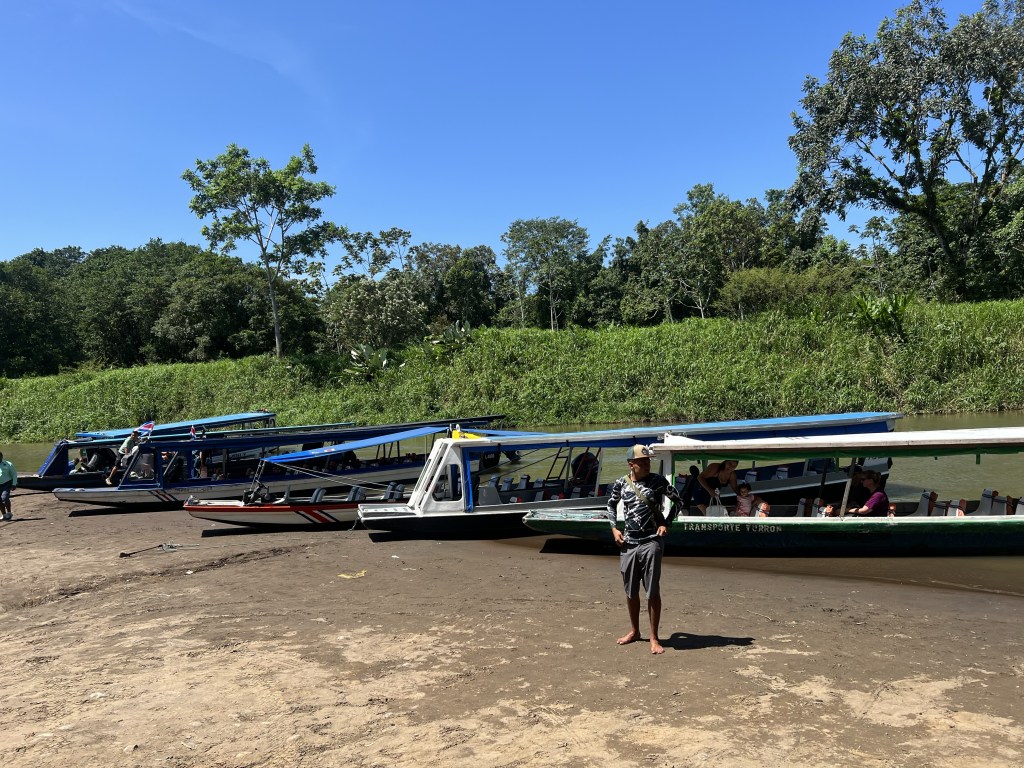
To reach this park requires a boat ride on a winding river of about an hour in a maneuverable flat bottomed river boat.
We passed through a lot of flat land full of Dole banana plantations on the way to and fro to this little ecotourism town, Tortuguero, in a narrow strip of beach jungle between Caribbean sea full of bull sharks and rip tides, and natural canals and rivers. Foreign owned fruit plantations and the labor and politics around them have played a notorious and important role in the history of Central America, which we are slowly learning more about, but in Costa Rica, plantation workers in the past were able to help enact labor protections key to its social democracy.
There were many boats going up and down carrying passengers and narrowly passing one another as the engines fought through the mud at times and other times seemed about to quit. Our pilot pulled over once to change the prop out.
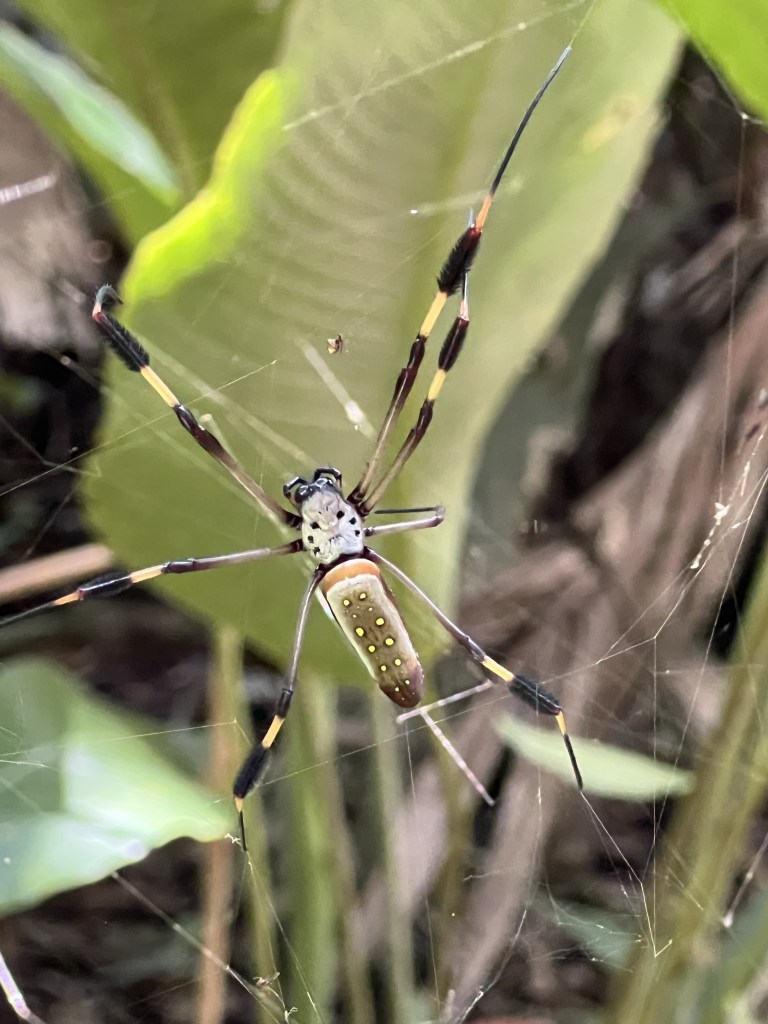
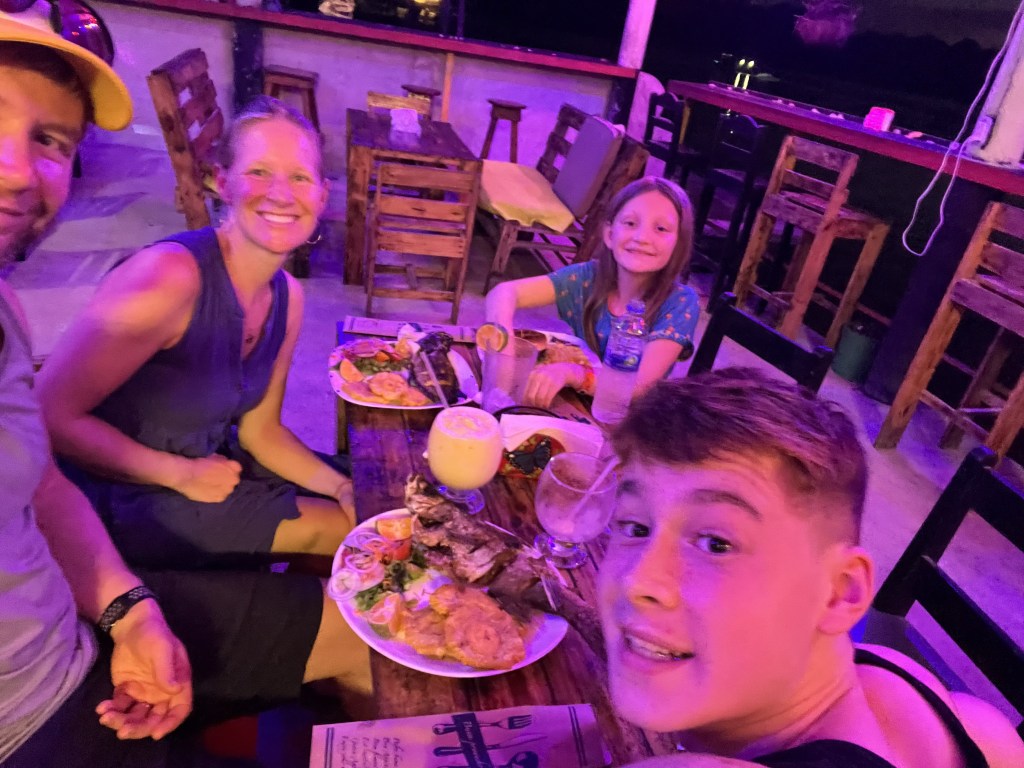
We were blessed to see turtle eggs being laid at night (no photos allowed), as well as baby turtles and mama turtle. A boat and hike tour brought us near many other amazing creatures. (Ethan had a 24 hour bug and we were thankful it passed.)
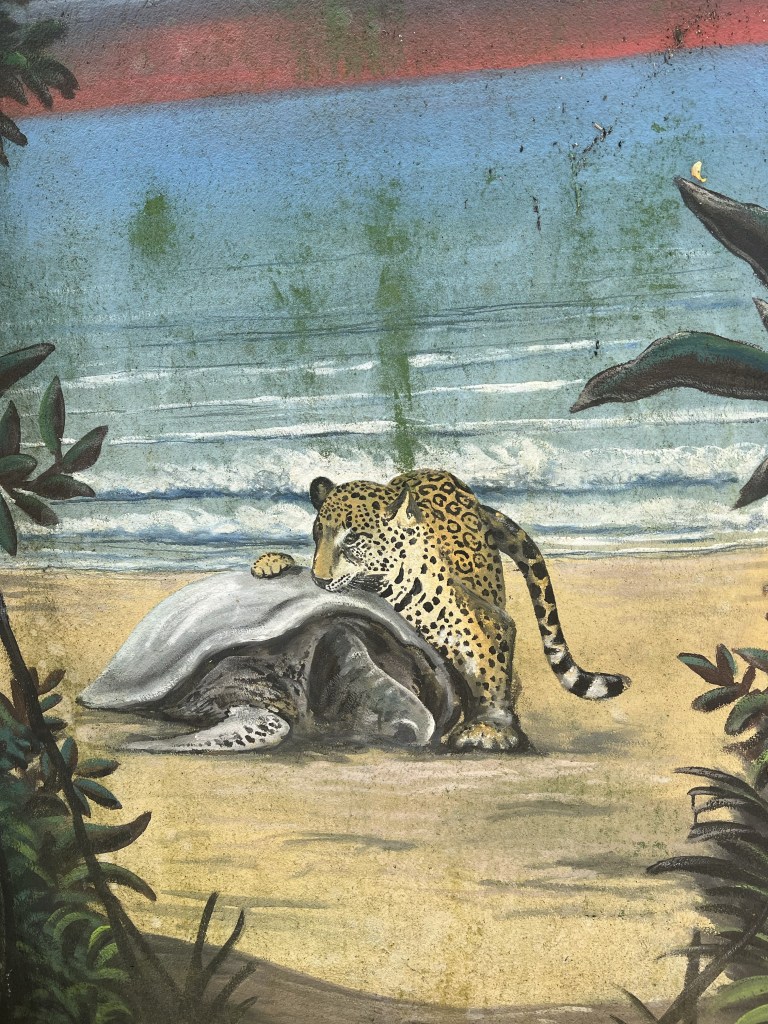
One thing we learned is that the jaguar population has been growing nicely with all the turtles to eat (they ate over 400 this year in this area according to the conservation group’s count), as well as the pets in the village, including our guide’s dog …
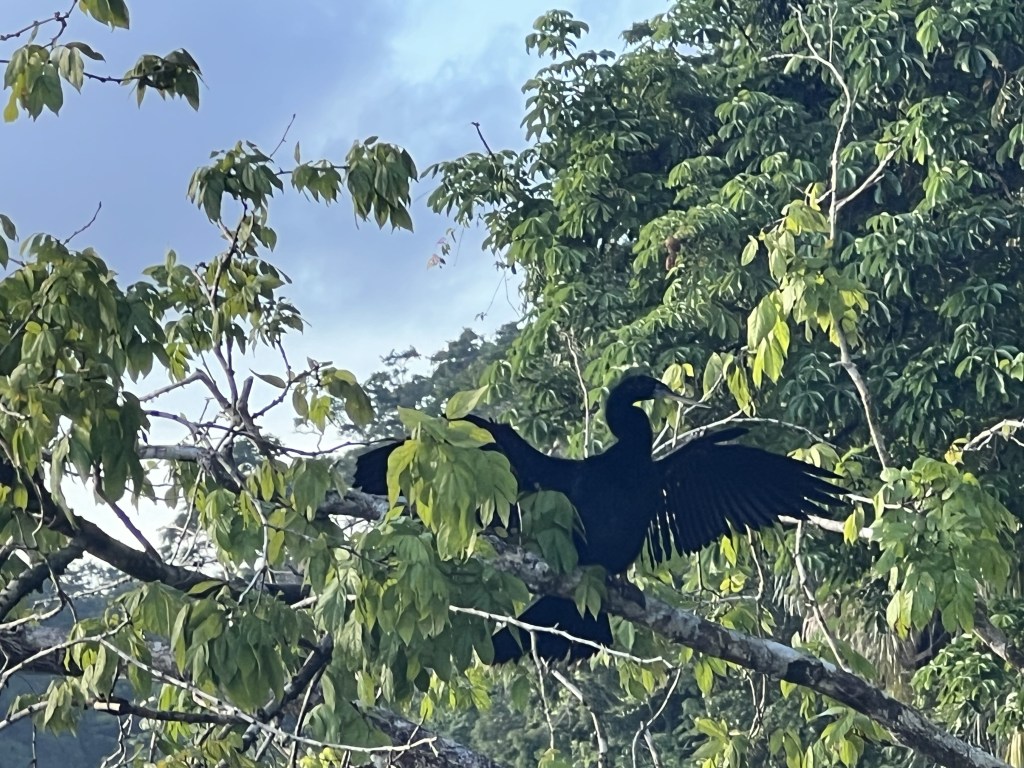
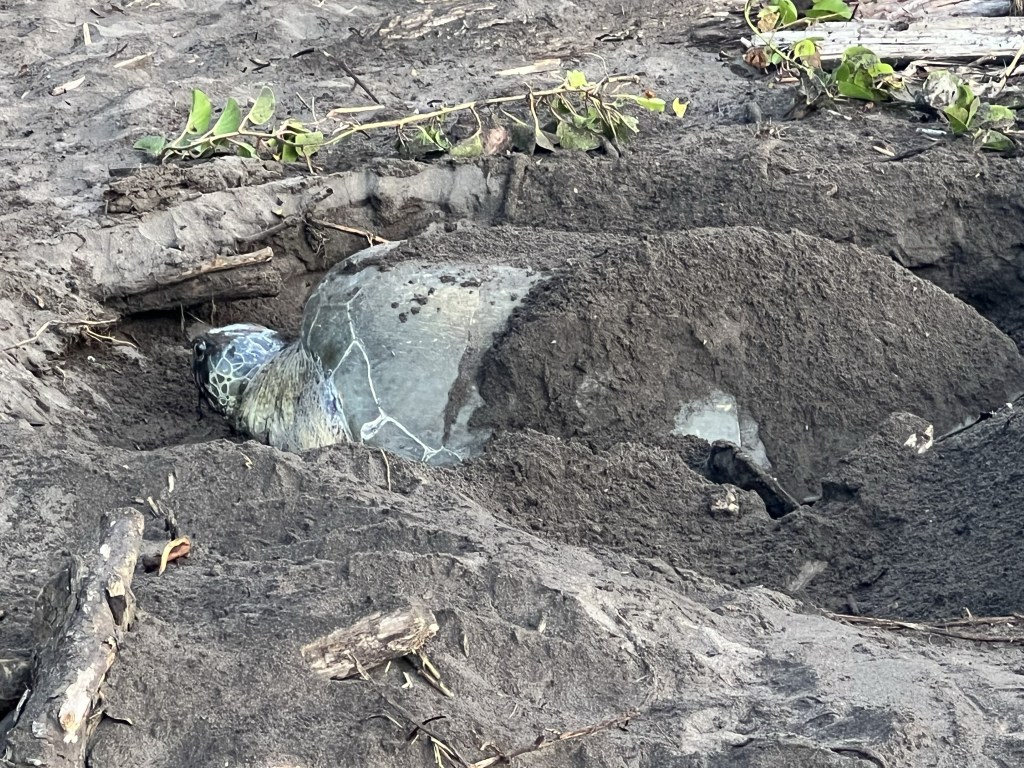
A number of people here have impressed upon us a big cultural change over the past generation of conservation values. Longer ago, it was more common to cut down trees and hunt monkeys without a second thought. But through a concerted educational effort, today’s young people in Costa Rica take it for granted that their ecological treasures are fragile and important. An interesting illustration of how what is noticed and valued (or disregarded and degraded) in life and in society can vary dramatically and change dramatically. The tourist dollars enabled by the monkeys and turtles also help make turtle soup and monkey kebabs less necessary for survival.
The conservationists and scientists are a major presence and trained tour guides well organized. We noticed a lot of conservation volunteers and workers from around the world. Costa Rica seems proud of its laws and their enforcement – often we see rules posted citing the number of the law passed creating the rule.
We walked around San Jose a bit on our way home and turned around the next day to send Devin off to Medellin!
Ethan and Luke recorded a bit more about our trip and this past week during our usual light afternoon thunderstorms :

 Bruckner Year in Costa Rica